
Modern inverter air conditioners are highly sophisticated machines. Unlike traditional fixed-speed units that switch completely on and off, inverter systems dynamically adjust their compressor speeds to maintain perfect ambient room temperatures using advanced power modules and circuit boards.
While this technology delivers exceptional energy savings, it also means that ignoring minor cooling anomalies can lead to high-cost component failures down the road.
Catching performance degradation early protects your budget from sudden out-of-pocket repair costs. Here are the five key warning signs that your system requires a professional diagnostic check before a complete breakdown occurs.
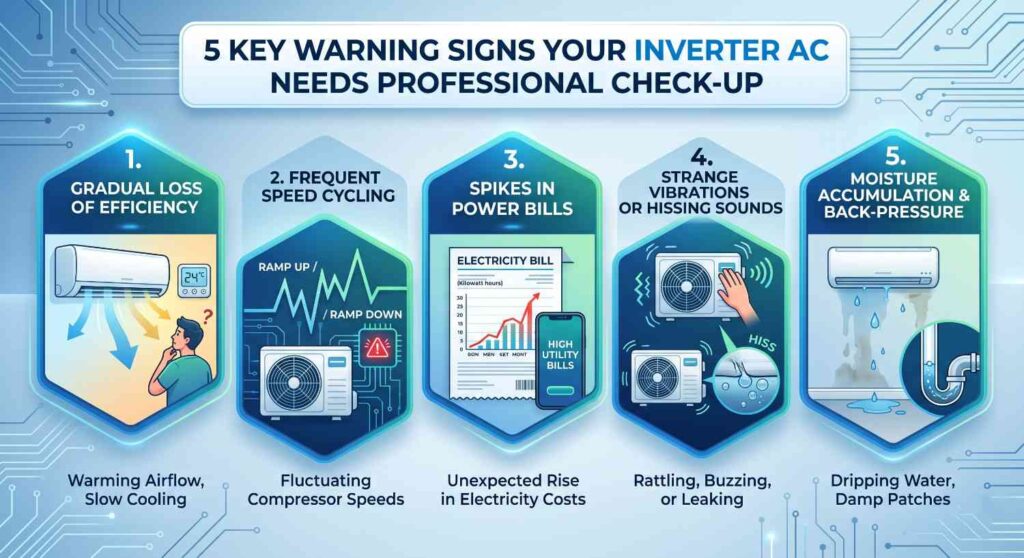
1. Subtle, Gradual Loss of Cooling Efficiency
If you find yourself lowering the temperature settings further or waiting much longer to cool down a room, your system is trying to tell you something. This gradual loss of efficiency usually points to internal dust buildup on the evaporator coils or a minor drop in refrigerant pressure. Catching this early prevents your compressor from running at maximum speed for too long, saving it from overheating.
2. Frequent Variable Speed Cycling
Inverter compressors are designed to run continuously at a low, power-saving cruise speed. If you notice your AC rapidly ramping its fan speeds up and down or frequently clicking the outdoor compressor unit on and off, the control circuit board (PCB) may be experiencing sensor reading errors. Professional calibration ensures your electronics manage power distribution correctly.
3. Unexplained Spikes in Monthly Power Bills
The primary reason consumers invest in inverter technology is electricity conservation. If your monthly utility billing scales up unexpectedly while your usage habits remain identical, the system is working overtime to compensate for an internal restriction. Cleaning internal filters and optimizing airflow loops can instantly restore factory-level efficiency.
4. Strange Operational Vibrations or Hissing Sounds
Modern indoor units should operate almost silently. Persistent hissing sounds often indicate a tiny micro-leak in the copper refrigeration coils, while deep rattling sounds point to worn-out motor bearings or loose fan assemblies. Addressing these physical signs early keeps a simple fix from turning into a complex component replacement.
5. Moisture Accumulation and Drainage Back-pressure
High humidity can cause water to collect rapidly within internal collection pans. If you notice water droplets spitting from the blower vents or damp patches along the wall under the indoor unit, the condensate drainage line is likely clogged with dust or algae. An authorized deep-cleaning flush clears out blockages before water overflows onto your sensitive internal control boards.